
Join us at MuniHac, Munich's yearly Haskell gathering! For three days, Haskell folks from all over meet up to code, learn, and hang out. New to Haskell or been at it for years? Doesn't matter - we've got workshops, talks, and projects for everyone. It's a great chance to learn and meet the enthusiastic Haskell community!
The MuniHac is organized by TNG Technology Consulting GmbH and will be hosted at the TNG offices in Munich (Beta-Straße 13, 85774 Unterföhring).
Conference shirts are available at our Spreadshirt shop.
Registration Desk:
| Friday, Oct. 9th 2026 | ||
|---|---|---|
| Time (CEST) | Hackathon | Talks & Workshops |
| 8:30 | Doors open & Registration | |
| 9:00 | Opening | |
| 9:15 | Project Marketplace | |
| 09:30 | Hack on | Beginners Workshop |
| 11:30 | Keynote: Manuel Chakravarty: Accelerate your numeric code | |
| 12:30 | Lunch | |
| 13:30 | Hack on | Beginners Workshop (continued) |
| 17:30 | Official end | |
| Saturday, Oct. 10th 2026 | ||
|---|---|---|
| Time (CEST) | Hackathon | Talks & Workshops |
| 9:00 | Doors open | |
| 9:30 | Hack on | |
| 11:30 | Keynote: Ziyang Liu: The Well-Compiled Haskeller | |
| 12:30 | Lunch | |
| 13:30 | Hack on | |
| 14:00 | Hack on | (Talk) Niko Pachuashvili: Triage: Or, How I Finally Got Away With Haskell in Anger |
| 15:30 | Hack on | (Talk) David Binder: Past, Present and Future of the Haskell Language Report |
| 16:30 | Hack on | |
| 17:30 | Official end | |
| Sunday, Oct. 11th 2026 | |
|---|---|
| Time (CEST) | Hackathon |
| 9:00 | Doors open |
| 09:30 | Hack on |
| 10:00 | Bavarian Breakfast |
| 12:00 |
Keynote:
Dominik Schrempf: Compiling C to Haskell – How hs-bindgen Translates C Headers
|
| 13:00 | Hack on |
| 14:30 | Project presentations |
| 17:00 | Doors close |
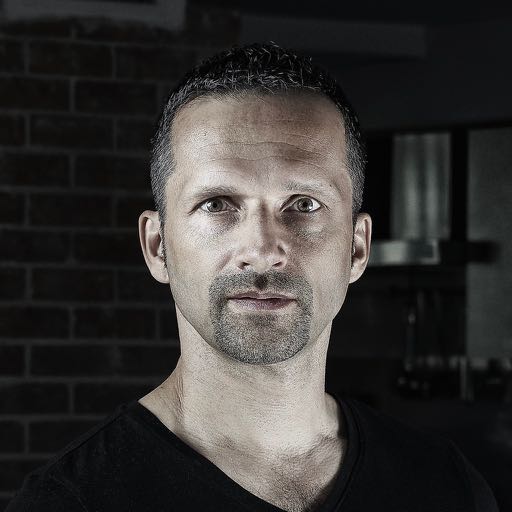
Accelerate is a library to achieve high performance for numeric algorithms (such as those found in graphics, simulations, and machine learning) on multicore CPU and GPU systems. Accelerate doesn’t achieve this by forcing you to write low-level monadic code, but by encouraging high-level purely functional code.
You guessed it. There is a price to pay. In Accelerate, you need to write your numeric array algorithms in an embedded language. That language is a subset of Haskell designed to facilitate high-performance data parallel algorithms. The rest of your program is still plain Haskell.
Accelerate comes with custom backends that translate code written in the embedded language into highly optimised machine code. That code gets efficiently scheduled onto multicore CPU and GPU systems by a custom runtime system.
In this talk, I like to achieve three goals: (1) I want to enable you to use Accelerate to implement numeric algorithms; (2) I want to provide a high-level outline of how Accelerate works; and (3) I want to encourage you to use Accelerate or even contribute to it. The first goal is in reach, even for beginning Haskell users. For the second goal, we will have to dive deeper, but I’ll keep it accessible with examples and thorough explanations. And finally, to use Accelerate effectively, it is more important to understand the algorithm that you want to implement than to be a Haskell expert.

hs-bindgen Translates C Headers
C has a library for everything, and those
libraries are fast, battle-tested, and maintained
by somebody else. Reaching them from Haskell is
the hard part: a Haskell-native rewrite is a
project of its own, and hand-writing bindings is
tedious and error-prone. hs-bindgen
automatically generates those bindings for you.
In this talk, we explore the vision and
the architecture behind hs-bindgen: a compiler
whose source language is C headers and whose
target is Haskell modules. We discuss some
challenges of reconciling C's low-level memory
model with Haskell's rich type system. I hope to
convince you that using a C library from Haskell
is less like a project of its own and more like an
afternoon's work.
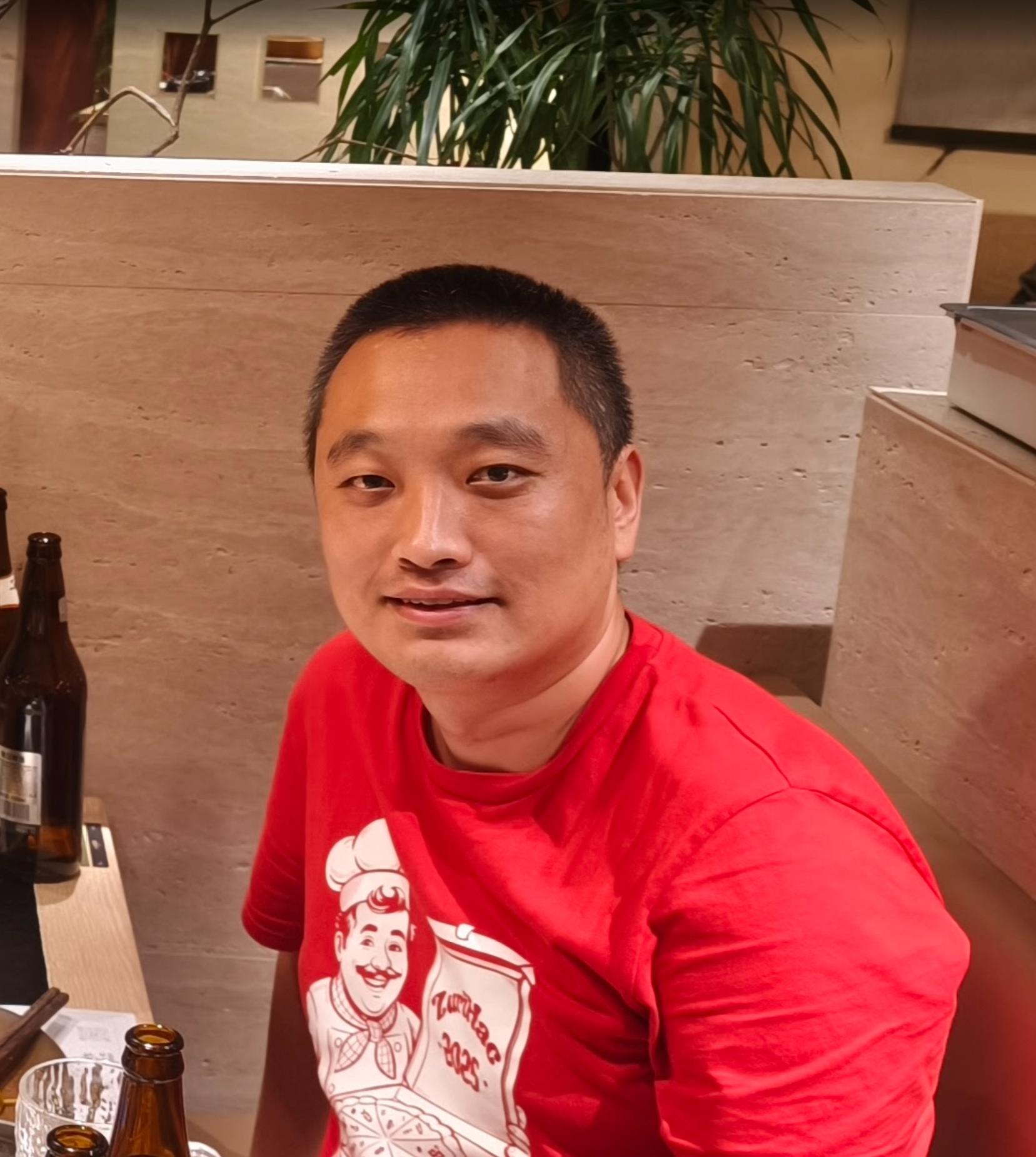
As Haskell developers, we love to talk about equational reasoning, type safety, compositionality, parametricity, and so on. These are great for reasoning about what the program computes, and they rest on a semantics that deliberately abstracts away many of the things compilers do. But they say much less about many concerns that matter in practice: how fast a program runs, what it allocates, why an optimization did or didn’t fire, or why the compiler is producing a baffling error.
This talk argues that a good understanding of your compiler can make you a much better functional programmer. Through a series of examples, including some surprising ones, we’ll see how looking past the source language can sharpen our intuition, challenge common assumptions, and help us write better programs.
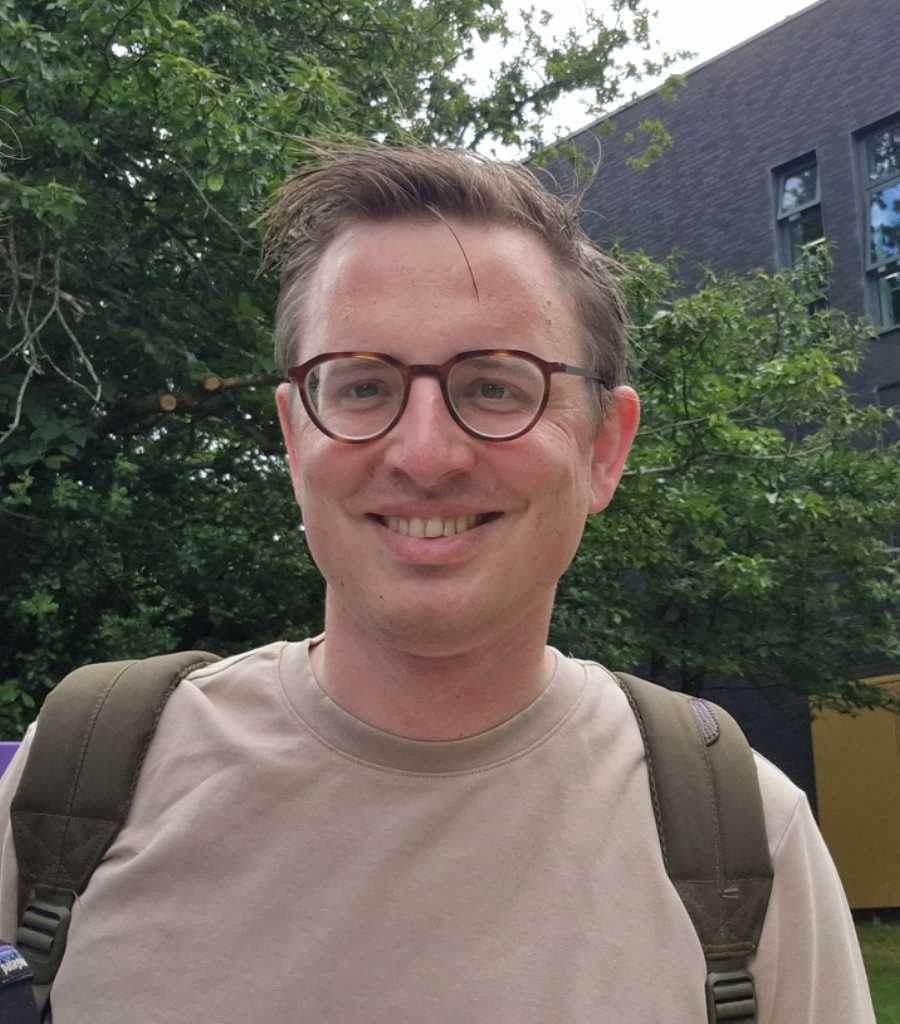
In this talk I am going to take a look at how we got to the current Haskell report, how it changed over the decades, and present the work we are currently undertaking to update it. I will present my own ideas on what the role of the language report can be going forward, but we will hopefully also discuss how the language report can fit with the GHC and CLC proposal processes to document and specify the language we love to use.

A doctor friend asked me to build a patient scheduling platform. With no team to cover the database, frontend, and UX, AI agents filled the gaps — my first real chance to use Haskell as the primary language for a real application, built around a typed domain model as the AI agent's specification.
Whenever complexity piled up, pushing correctness back into the domain model almost always helped: a sprawl of possible transitions collapsed into a forward-only process through a few states, and whole categories of "can it go back to that state?" bugs simply stopped being askable.
But that strategy has a limit. Two staff claiming the same request at once depends on timing the type checker was never given as input — the model can't rule out what it was never told about.
Takeaway: `Domain.hs` is a real specification for an AI agent — but only as far as the facts it's actually given. Concurrency is where this experiment found that boundary.
Want to keep in touch and receive updates about MuniHac? We have an account , a mailing list, and a Slack workspace.
You can reach us via email: munihac@tngtech.com.
Each participant will retain ownership of any and all intellectual and industrial property rights to his or her work created or used during the Hackathon.